©

Jeff Graphy

Astro 3000

Château-Renard Observatory

Paul Felenbok

Before going to bed every night, do you go out and look at the sky? Does contemplating the milky way give you vertigo? Have you always wanted to know everything about constellations? Do you make a wish each time you see a shooting star? Then we’ve got something for you. Quite a thing in fact: spend a night at almost 3,000 meters high, face-to-face with galaxies and nebulae, your eye glued to the telescope like a real astronomer.

Closer to the stars

perched high above of St Véran

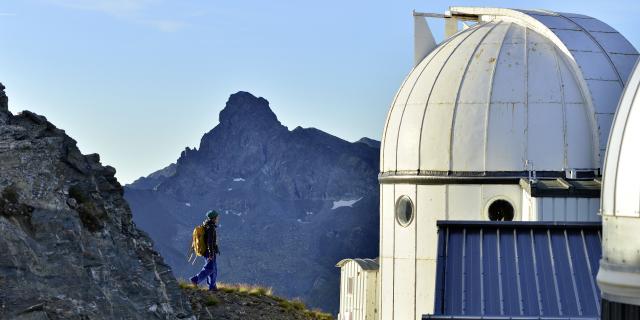
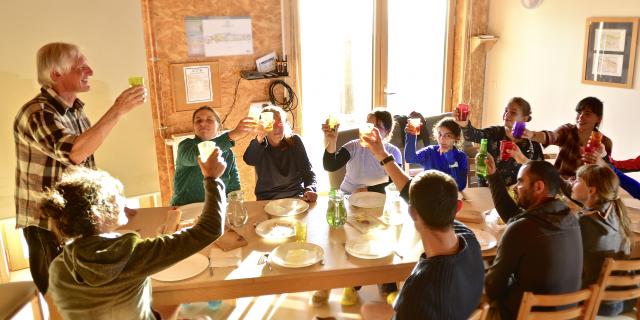
You will get to see one of the clearest skies in the world. We are not inventing anything, science did, thanks to a purity index known as “seeing”. The absence of light pollution thanks the distance from urban centers, an elevation of 3,000 meters(less atmosphere between your eye and the stars), dry air and a sky rarely cluttered with clouds, mean that the annual number of clear nights is 150. That’s why the Saint-Véran astronomical observatory is one of the world’s top five spots for admiring the universe. Fully renovated with dormitories, a kitchen and a dining room, it’s run by nebula pros. You’ll be welcomed for a night in the depths of space.

Château-Renard observatory - Paul Felenbok

A cosy cocoon

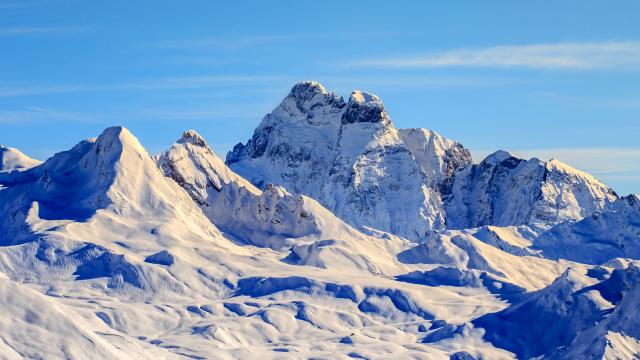
Once you’re up there, prepare yourself for another dimension. Visit the large dome and its 62 cm telescope, which discovered the “St-Véran” asteroid. Then learn how to operate an automatic telescope in a second dome. This will take you to celestial wonders such as Saturn’s rings, Jupiter’s eyes, the Andromeda galaxy and the Eagle nebula – renowned stars. At dawn, we will meet at the summit of the Peak, wrapped in a comfy blanket. The Mount Viso, king of the mountains, greets you as the sun chases away the darkness, contributing to an overall experience which you will think back on with stars in your eyes.


What should I know before booking?

On the way up and once you're therehydrate

Water! Drink, drink and drink it again…Indeed, with the hike, the altitude and dry air, you can be dehydrated. So to avoid a headache and enjoy the site and its stars all night long: drink, drink and drink again!

Good to know

Many of these photos’page were taken by Jeff Graphy. A nocturnal landscapes photographer who highlights his surroundings under the stars. His photographs are on display in his studio and for sale online.

Info

How do I get there?

How to get to the Observatory

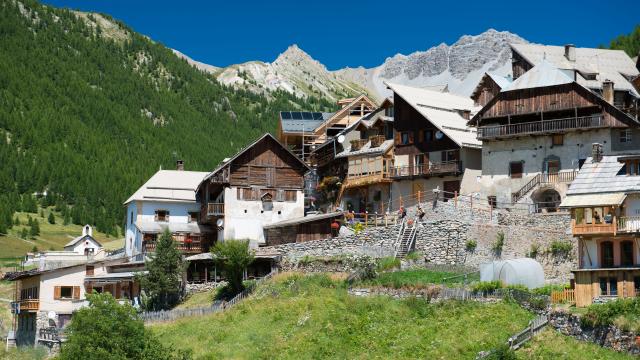
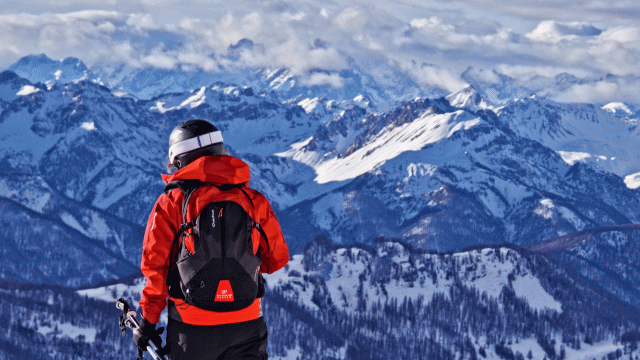
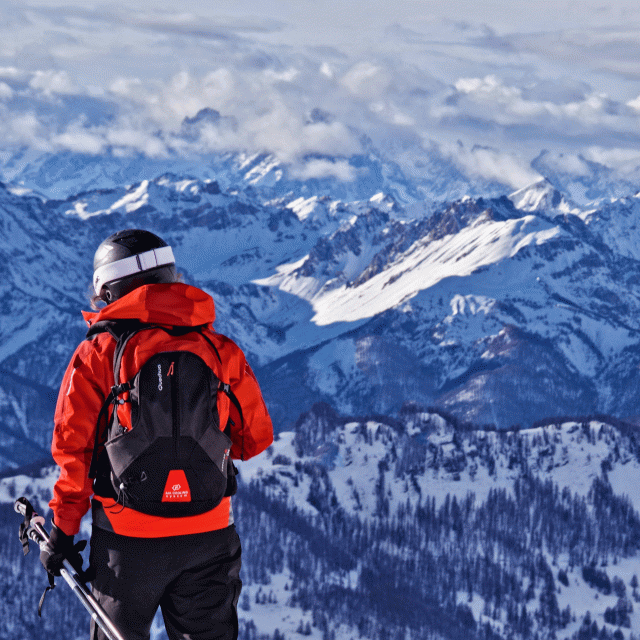
Gaston Rebuffat, the great French mountaineer, once said: “Beautiful horizons are earned”. They may have put the parking lot as high as possible(St-Véran, at 2,040 m), but you still have 900 meters more to hike up. But don’t worry, we’ll give you a few tips to make this climb a treat rather than a punishment. DuringWinter (here and at almost 3000 meters high, April is a winter month): Snowshoe ascent: 4 to 5 hours, depending on your level of fitness, on an unmarked route. Backcountry skiing: you can ski from the top of the Saint-Véran ski area, start at the top of the Grand-Serre ski lift, then a 45-minute traverse on an unmarked, unsecured itinerary. June to October: Hike: 4H00 from the village of Saint-Véran or from the Lariane bridge: itinerary here. Local tip: electric bike ascent: 1H00 if the path is completely cleared of snow. If there are still snowfalls, you’ll have to climb on foot, equipped with crampons and poles.

More emotions...

And sensations!